
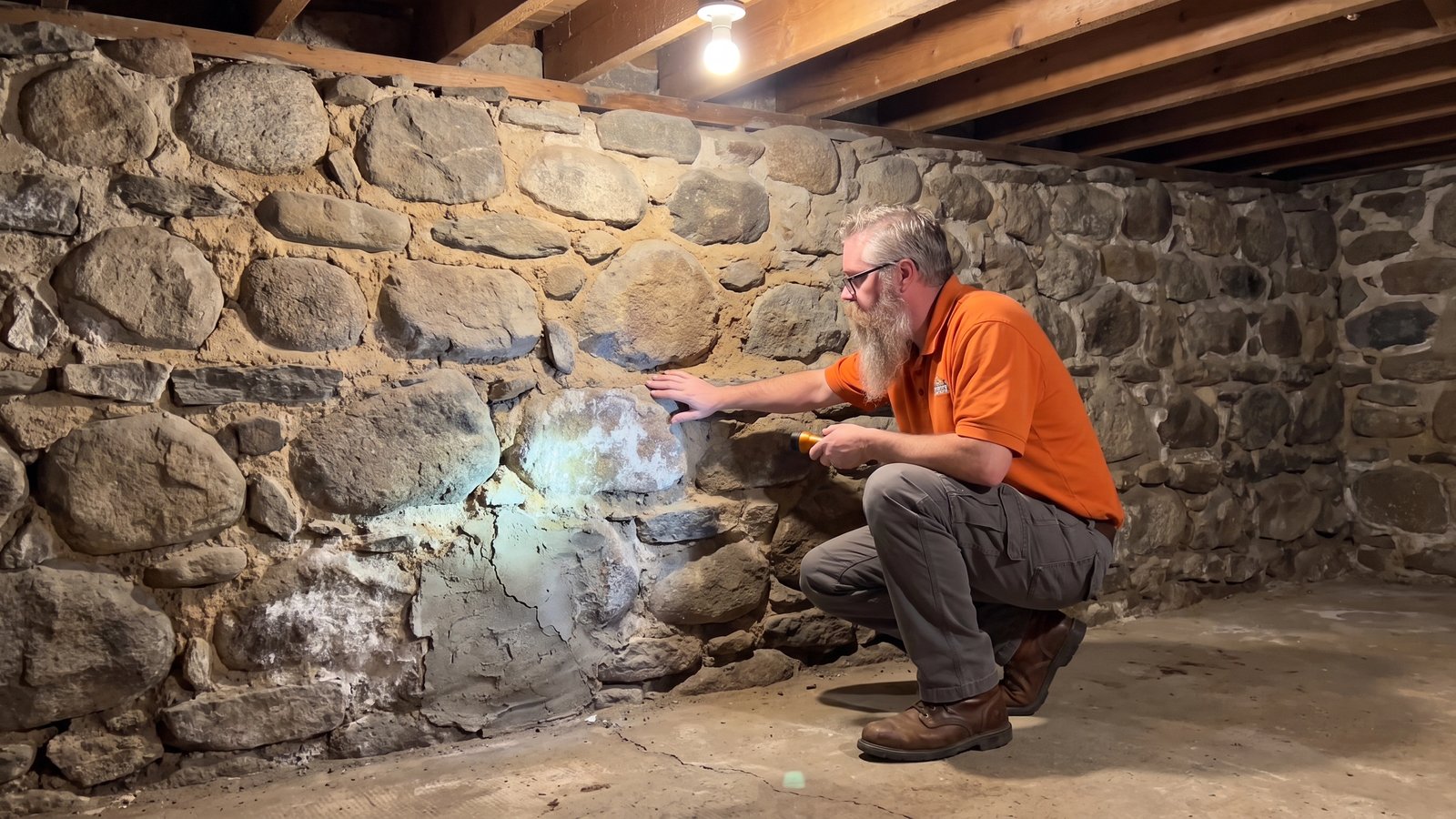
I can usually tell the moment a buyer reaches the bottom of the basement stairs in a South End home. They see a wall of rough stone instead of smooth concrete, and their face says it before they do: is this a dealbreaker? Almost every time, my answer is no. A foundation that has stood since the 1890s has already survived more Maritime winters than any modern foundation has been asked to. What it needs is the right kind of attention, and the right kind is not always obvious.
Quick Answer
Most stone foundation issues in Southern New Brunswick are maintenance, not structural failure. Repointing deteriorated mortar joints is the most common repair, and masonry repointing in Canada typically runs $5 to $28 per square foot depending on condition and access. Parging a foundation runs roughly $1,500 to $2,000 for a standard house. The critical rule: repairs must use a lime based mortar softer than the stone, never straight Portland cement. Bulging walls or displaced stones call for a structural engineer before anyone quotes a fix.
Why Southern New Brunswick Has So Many Stone Foundations
Walk the older blocks of uptown Saint John, Hampton, or Sussex and you are walking past hundreds of homes built before poured concrete existed here. Builders used what the region gave them: fieldstone and rubble laid up in lime mortar, often two feet thick at the base. These walls carry load through sheer mass, and they do it well. But a stone wall moves moisture differently than concrete and fails differently than concrete, and treating it like concrete is where most of the damage I see actually comes from.
What Is Normal in a Stone Foundation (and What Is Not)
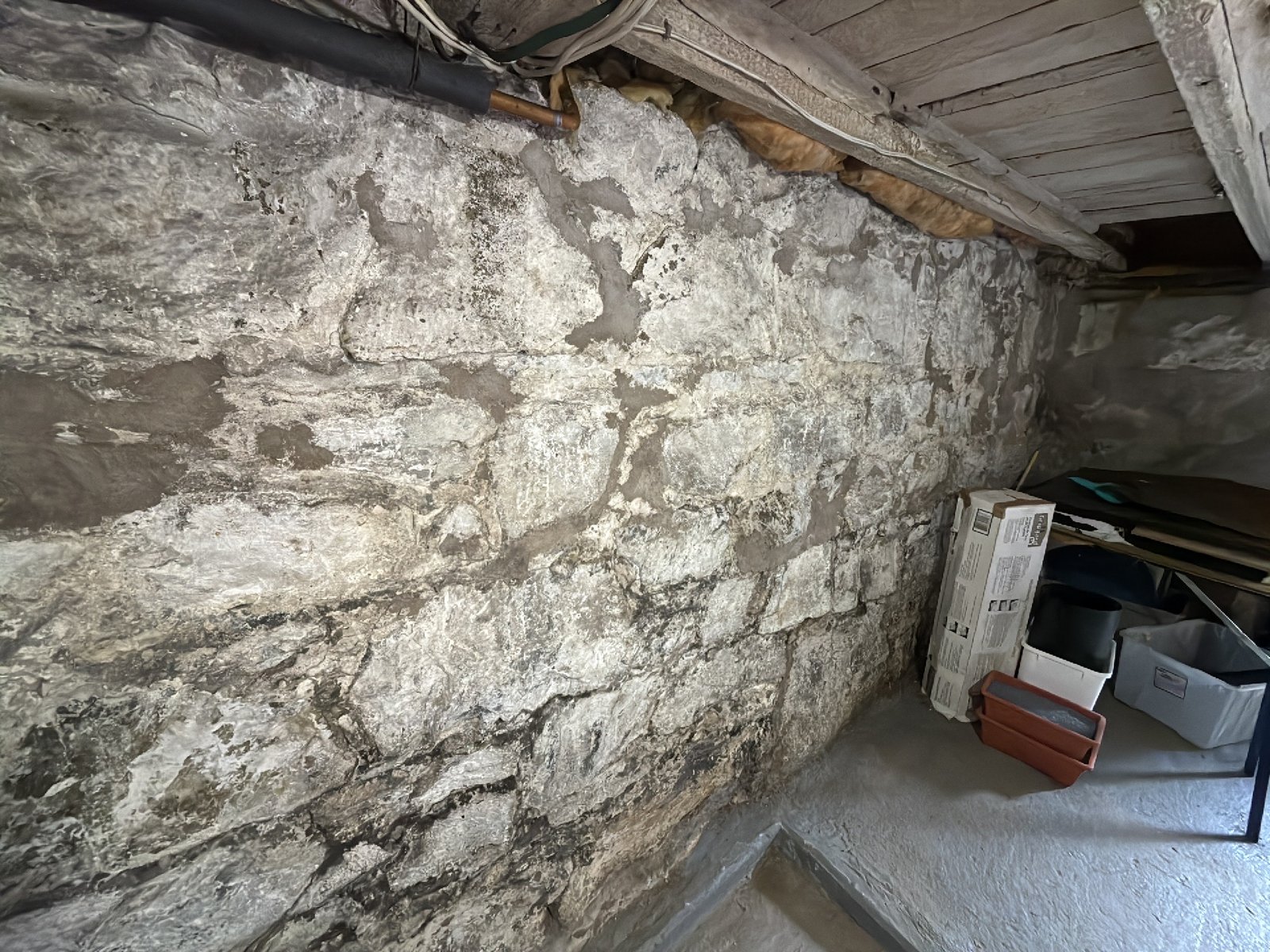
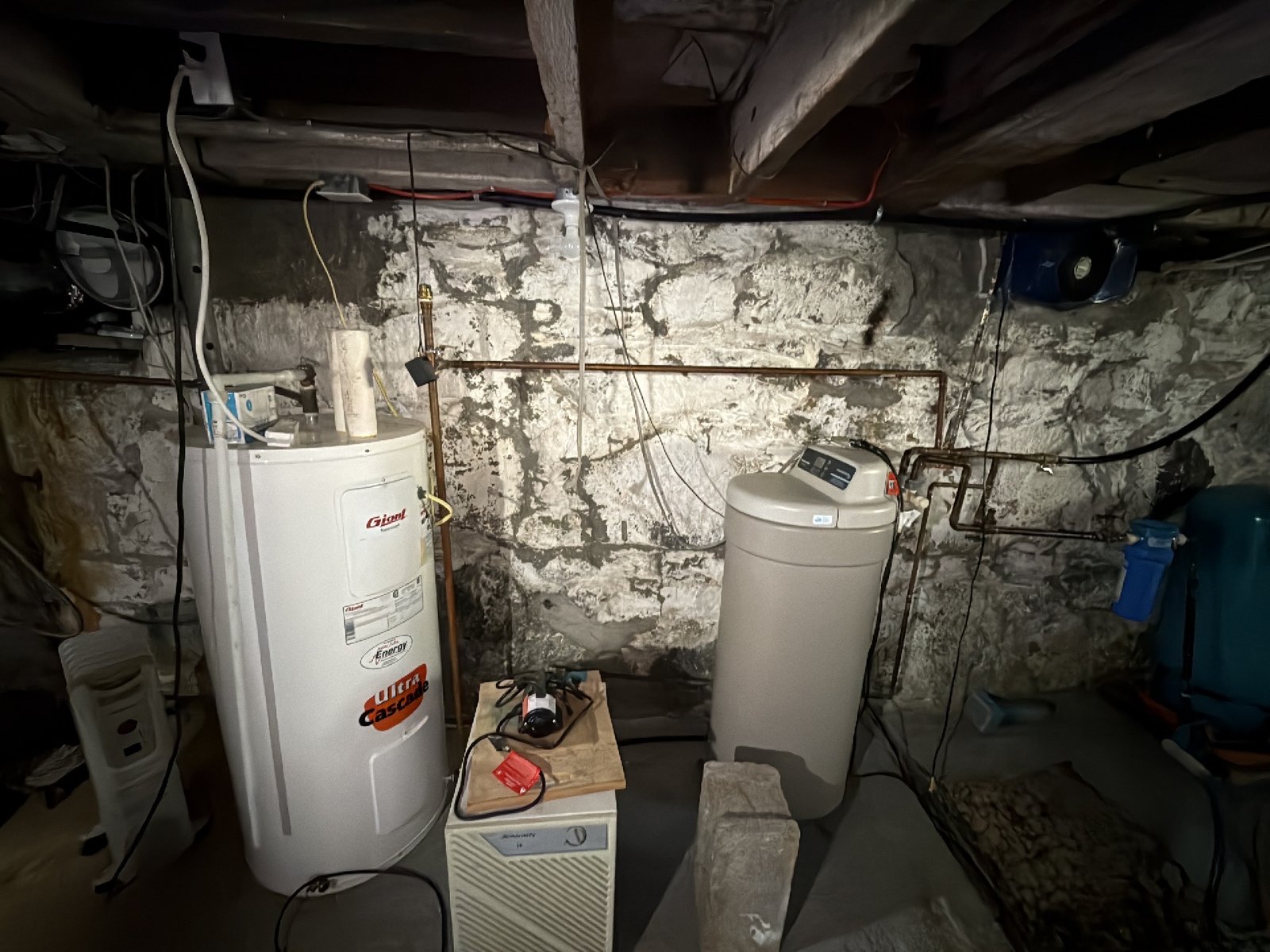
After a century of service, some wear is simply what a stone foundation looks like: soft or sandy joints near the floor, white chalky staining, a small stone loose in its bed. I write these up as maintenance items because that is what they are, with timelines measured in years.
What earns a different tone in my report is movement. A wall that bulges inward, stones rotated out of plane, a stair step pattern of open joints climbing a corner. Those signs mean the wall is redistributing load, and the next call is a structural engineer, not a mason. Getting that order right protects you from paying for cosmetic work on a structural problem.
Here is how I sort what I see in these basements:
| What you see | What it usually means | The next step |
|---|---|---|
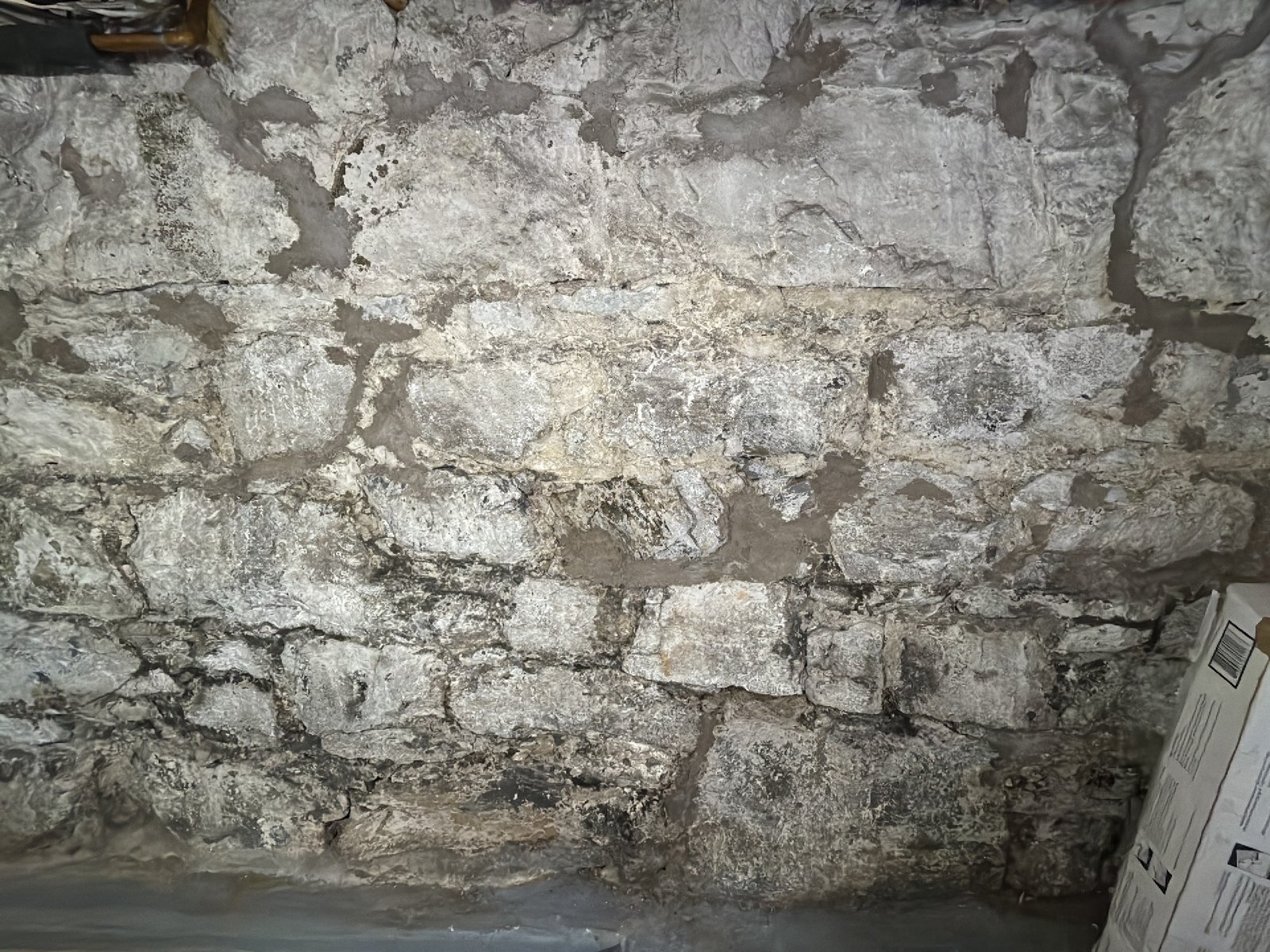
| Soft or sandy mortar joints near the floor | Normal aging of lime mortar | Repointing with a lime based mortar, on your schedule |
| White chalky staining (efflorescence) | Moisture is passing through and evaporating, which the wall is designed to do | Check gutters, downspouts, and grading outside |
| One small stone loose in its bed | Local mortar loss | A mason visit, routine work |
| A hard grey cement patch over old joints | A past repair that is now trapping moisture | Plan proper repointing of that section |
| A bulging or bowing section of wall | The wall is redistributing load | A structural engineer, before any quotes |
| Stair step pattern of open joints climbing a corner | Movement in the wall | A structural engineer, before any quotes |
The Mortar Rule That Decides Every Repair
If you remember one thing from this article, make it this: the mortar must always be softer than the stone. The National Research Council of Canada and the Canada Masonry Design Centre both say it plainly: mortar is the sacrificial element in the wall. It absorbs the movement and the moisture, it wears out, and it gets renewed. That is the design.
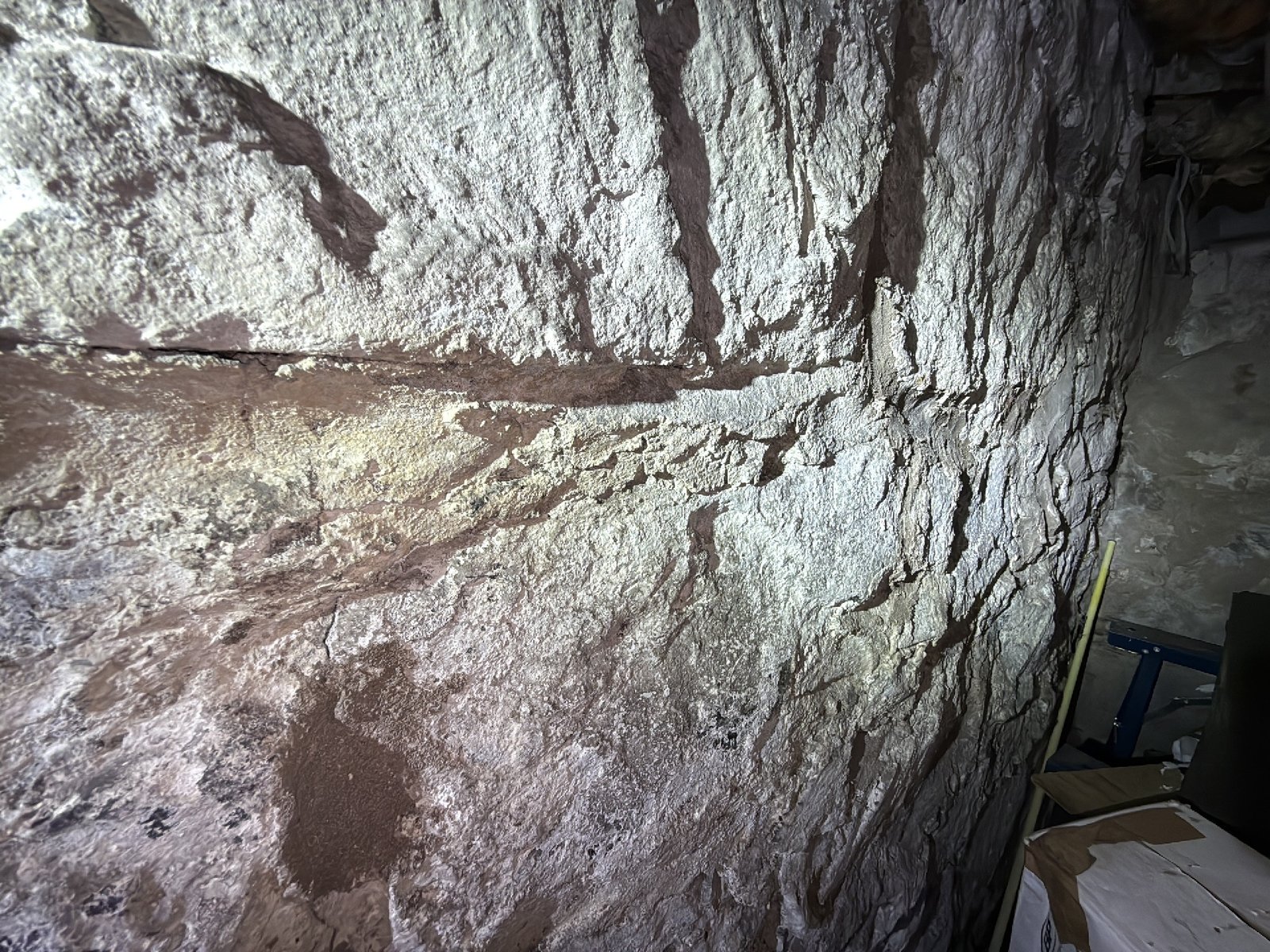
Modern Portland cement mortar breaks that design. It is far harder than the lime mortar these walls were built with, and once it seals the joints the wall can no longer breathe. Moisture that used to escape gets driven into the stone itself, where freeze and thaw cycles go to work on it. Parks Canada’s conservation standards make compatible materials a core principle for exactly this reason. So the first question to ask any mason is what mortar they intend to use. The answer you want to hear is a lime based mix matched to the original. The same logic applies indoors: sealing the inside face of a stone wall with an impermeable coating pushes moisture deeper into the structure. A stone wall managed well is a wall allowed to breathe on at least one face.
Start With Water Before You Touch the Stone
Here is the part that saves people real money. A large share of the deteriorating stone foundations I inspect do not have a masonry problem first. They have a water problem, and the masonry is reporting it. Mortar erodes fastest where roof water is delivered straight to the wall: a downspout dumping at the corner, a clogged eavestrough sheeting water down the face, grading that slopes toward the house.
So before any repointing quote, walk the outside of the house in a hard rain. Extend the downspouts, clear the eavestroughs, build up the grade. It is unglamorous work and it is the highest return repair on this entire page. Repointing a wall while the downspout still empties beside it is buying the same repair twice.
What Stone Foundation Repair Costs
Current Canadian figures from RenoAssistance and HomeGuide put the common repairs in these ranges. Lime mortar itself is inexpensive; the cost is in the skilled hands, and for this work skilled hands are worth every dollar.
| Repair | Typical cost | What drives the price |
|---|---|---|
| Repointing mortar joints | $5 to $28 per square foot | Joint condition, wall height, access |
| Parging foundation walls | $1,500 to $2,000 for a standard house | Wall area and surface preparation |
| Exterior drainage work (downspout extensions, grading) | Often under $500 in materials | Mostly labour; highest return on this page |
| Structural repair (rebuilding a section, underpinning) | Quoted case by case | The engineer’s scope defines the work |
Structural repairs are a different category. Rebuilding a bulged section, underpinning, or full replacement is quoted case by case, and the honest answer is that no article can price it for you. What I can tell you is the sequence that keeps those quotes honest: engineer first, scope defined by the engineer’s report, then quotes from masons who work in stone.
Help Paying for It in Saint John
If your home sits inside one of Saint John’s heritage conservation areas, the City of Saint John Heritage Grants program includes funding for major masonry and structural repair, specifically to help owners keep original materials in place. If you own uptown, talk to the city’s heritage staff before you book the mason.
Buying an older home with a stone foundation?
I have been in the basements of these homes across Southern New Brunswick for over a decade. A thorough inspection tells you whether you are looking at routine maintenance or something that needs an engineer, before you close.
Find My PackageFrequently Asked Questions
Are stone foundations a problem when buying an older home?
Not by themselves. A stone foundation is original construction for much of Southern New Brunswick’s pre-1920 housing stock, and most of the ones I inspect are performing well. What matters is condition: the mortar joints, any evidence of movement, and how water is managed outside.
How do I know if my stone foundation needs repointing?
Press a key gently into a mortar joint. Sound mortar resists; mortar that crumbles to sand is ready for renewal. Widespread soft joints, gaps you can see into, or mortar washing out at the base of the wall are the usual signs. Repointing is normal life cycle maintenance, not an emergency.
Can I repoint a stone foundation myself?
Small areas are within reach of a patient homeowner. The risk is the material choice, not the labour: off the shelf mortar mixes are mostly Portland cement based and too hard for old stone walls. Use a lime based mortar matched to the original and work in small sections. For full walls or anything near a bulge or crack, hire a mason with stone experience.
What does it mean when white powder appears on my stone foundation?
That is efflorescence: minerals left behind when moisture moves through the wall and evaporates. It tells you the wall is handling moisture, which stone foundations are designed to do. Heavy or growing efflorescence means more water is reaching the wall than should be, so check the gutters, downspouts, and grading.
When does a stone foundation need a structural engineer?
When the wall has visibly moved: bulging or bowing sections, displaced stones, a stair step pattern of open joints, or new gaps at the sill line. An engineer defines what is happening and what the repair must accomplish. For everything short of movement, a qualified mason and good water management cover it.
The takeaway is simple: a stone foundation is not a defect, it is a different technology, and it rewards owners who work with it instead of against it. If you are buying or already own an older home in Southern New Brunswick and want to know exactly where your foundation stands, book your inspection at theinspectors.ca or call or text (506) 651-9461.