
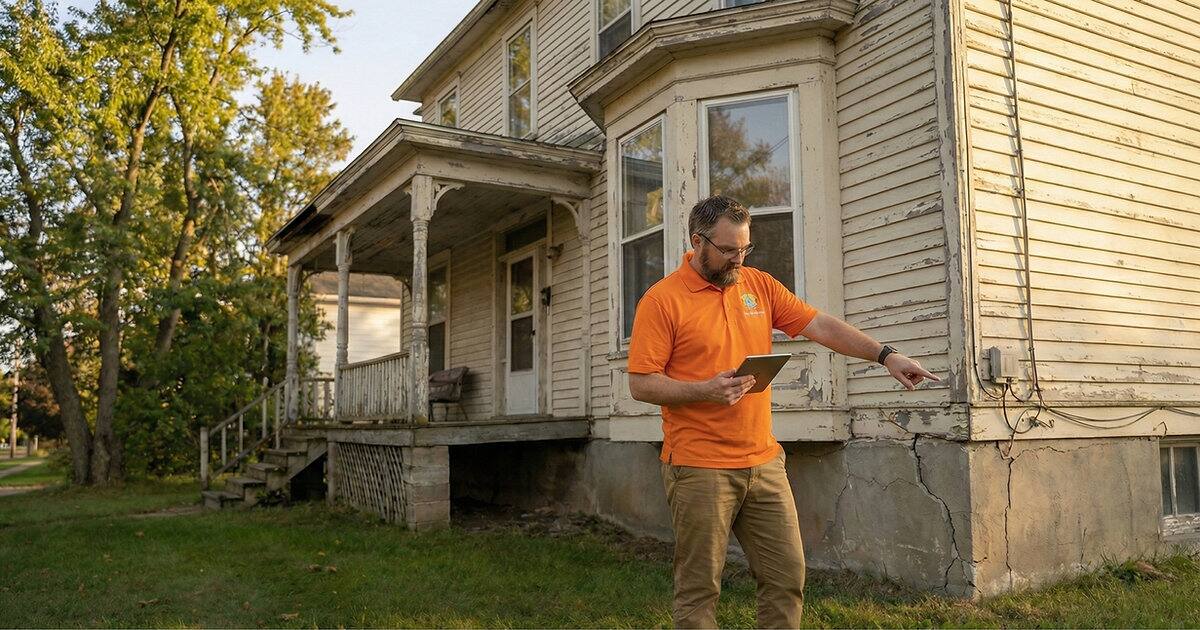
After 10 years and thousands of inspections, the same issues show up again and again. Here’s what they are and what they cost.
Quick Answer
Older homes in Southern NB share a consistent set of issues regardless of neighbourhood or price point. The 10 most common findings directly affect insurance, financing, and what you spend in the first few years. Total correction costs can range from $40,000 to $100,000+. None should stop a purchase, but all should be budgeted for.
Why This Matters
Whether it is a 1920s foursquare in Saint John South End or a 1960s bungalow in Rothesay, older homes in this area share a remarkably consistent set of issues. After 10 years and thousands of inspections across Hampton, Quispamsis, Sussex, and the surrounding communities, I see the same 10 things come up again and again.
None of these should stop you from buying an older home. Some of the best built homes in Southern New Brunswick are 80 or 100 years old. But knowing what is there and what it will cost is the difference between a smart purchase and an expensive surprise.
This guide covers the 10 most common findings, what they cost to fix in Southern NB, and which ones affect your insurance, financing, and negotiation.
1. Knob and Tube Wiring
Still active in a surprising number of pre-1950s homes across Southern NB. The wiring itself is not automatically dangerous. It was the standard for decades and it worked. The real problem is what has happened to it since. In older homes that have been renovated over the years, I regularly find knob and tube that has been buried under blown in insulation, spliced into with modern Romex wiring, or run through areas where it cannot dissipate heat properly.
Knob and tube was designed to run in open air. When you pack insulation around it or splice into it with incompatible connectors, the risk profile changes. Overheating at connection points is how electrical fires start in older homes.
Typical cost: Full rewire runs $8,000 to $15,000+.
2. Galvanized Steel Plumbing
Common in homes built before 1970. Galvanized pipes corrode from the inside out, gradually restricting water flow over decades. You will notice low water pressure at fixtures, rust coloured water when taps are first turned on, and eventually pinhole leaks. By the time you can see corrosion on the outside of the pipe, the inside is usually much worse.
The corrosion is not uniform. Horizontal runs and joints deteriorate faster than vertical sections. I check water pressure at multiple fixtures and look at the visible supply lines in the basement for scaling, discolouration, and joint deterioration. A home with “some galvanized remaining” is a home that will need repiping. The question is when, not if.
Typical cost: Full repipe (copper or PEX) runs $5,000 to $12,000.
3. Aluminum Wiring
Installed in many homes built between 1965 and 1976 when copper prices were high. Aluminum expands and contracts more than copper with temperature changes, which loosens connections over time at outlets, switches, and panel terminations. A loose connection generates heat. Heat at an electrical connection is a fire risk.
The fix is manageable. A licensed electrician can pigtail every connection point with copper connectors using approved materials. This addresses the expansion issue at the termination points where the risk exists. A full rewire is an option but usually not necessary if the pigtailing is done properly throughout the home.
Typical cost: Pigtailing runs $2,000 to $4,000. Full rewire is significantly more.
4. Vermiculite Insulation
That pebble like, grey brown granular insulation sitting in the attic of many older NB homes. Not all vermiculite contains asbestos, but a significant percentage was sourced from a mine in Libby, Montana (sold under the brand Zonolite) that was contaminated with tremolite asbestos. You cannot tell by looking at it. Until it is tested by a qualified lab, it should be treated as suspect and left undisturbed.
From an inspection perspective, vermiculite creates a blind spot. When I cannot safely enter or move through an attic because of suspect insulation, conditions underneath it go unreported. Air leaks, moisture staining, wiring issues, ducting problems. All of it is hidden. That limitation is documented in the report, but it means the buyer is making a decision with incomplete information about the attic space.
Health Canada maintains guidance on vermiculite insulation and recommends that homeowners not disturb the material until it has been professionally tested. If testing confirms asbestos content, professional abatement is required before any renovation or insulation work can proceed in the attic.
Typical cost: Professional removal runs $5,000 to $15,000+.
5. Clay or Cast Iron Sewer Lines
Pre-1970s homes in Southern NB almost always have clay or cast iron main sewer lines running from the house to the municipal connection. Clay pipes develop cracks at joints where tree roots find their way in. Cast iron corrodes internally and develops bellied sections that pool water and debris. Both can function fine for decades and then fail suddenly.
The only way to know the condition of the main sewer line is a sewer scope camera inspection. A camera is fed through the cleanout and records the full length of the pipe from the house to the street. Root intrusion, bellies, cracks, offsets, and blockages all show up on camera. This is why I recommend a sewer scope on every older home.
Typical cost: Sewer line repair or replacement runs $5,000 to $10,000+.
6. Egress Window Violations
Finished basements in Southern NB homes often have bedrooms that were added without proper egress windows. The New Brunswick building code requires a minimum 3.8 square feet of unobstructed opening in every bedroom for emergency escape. Many older renovations used standard basement windows that fall short of this requirement.
This is not a cosmetic issue. It is a life safety requirement. If a bedroom does not have a window large enough for an adult to climb through during a fire, it does not meet code as a bedroom. That matters for insurance, for resale, and for the people sleeping in that room.
I measure every basement bedroom window during the inspection. If the opening is undersized, it is documented in the report with the measurement and the code requirement. This gives the buyer a clear basis for negotiation or for budgeting the upgrade.
A new egress window with an exterior well typically runs $3,000 to $6,000 per window in Southern NB. I cover egress window requirements and what every buyer needs to check in a separate guide, including how to spot violations during showings before you make an offer.
Typical cost: A new egress window with an exterior well runs $3,000 to $6,000 per window in Southern NB.
7. DIY Renovations Hiding Problems
This is the one that surprises people the most. Fresh drywall, new flooring, a recently finished basement. These are not always improvements. In older homes, renovations done without permits or professional oversight often conceal problems rather than fix them.
I have seen new walls built directly over active knob and tube wiring. Moisture barriers installed backwards, trapping water against the foundation. Structural members notched or cut to run plumbing. Electrical work that would not pass any inspection. The better a renovation looks on the surface, the more carefully I look behind it.
Typical cost: Correction costs range from a few hundred dollars to $30,000+ depending on what is hidden.
8. Foundation Moisture and Water Intrusion
Older foundations in Southern NB, whether stone, rubble, block, or early poured concrete, were not built with modern waterproofing. Many have no exterior membrane, no interior drainage system, and no sump pump. Water staining on basement walls, efflorescence (white mineral deposits), musty odours, and evidence of past water lines are extremely common.
Some moisture in an older basement is manageable. A well maintained gutter system, proper grading away from the foundation, and a working sump pump handle most of it. Persistent water intrusion that saturates walls, pools on floors, or produces visible mould growth is a different conversation. That points to either a failed drainage system, high water table conditions, or grading that directs surface water toward the foundation.
Southern NB’s spring thaw and heavy rain seasons put older foundations under significant seasonal pressure. I use thermal imaging to identify moisture patterns that are not visible to the naked eye, including damp areas behind finished walls.
Typical cost: Interior drainage and sump runs $5,000 to $10,000. Exterior waterproofing is significantly more.
9. Undersized Electrical Panel (60 Amp)
Many older homes in the area still have 60 amp electrical service, the standard when homes had a few lights, a stove, and not much else. Today’s loads, dryers, heat pumps, EV chargers, air conditioners, home offices, require 100 amp service at minimum. Many homes are being upgraded to 200 amp.
A 60 amp panel does not just limit what you can run. It can also be a red flag for insurance and financing. Some lenders and insurers view a 60 amp panel as a deficiency that needs to be addressed, particularly when combined with other electrical findings like aluminum wiring or a fuse panel.
Typical cost: Panel upgrade (60 to 200 amp) runs $2,500 to $5,000.
10. Inadequate Insulation and Air Sealing
Older NB homes were built before modern energy codes. Many have little to no insulation in exterior walls, minimal attic coverage, and significant air leakage around windows, doors, rim joists, and attic hatches. The result is high heating costs, a major factor when many of these homes still run on oil, and condensation risks in attics and wall cavities.
Thermal imaging during the inspection makes these gaps clearly visible. I can show a buyer exactly where heat is escaping and where cold air is entering, often in areas that look perfectly fine from the living space. Rim joists, the area where the floor framing sits on top of the foundation wall, are one of the most common and most overlooked sources of heat loss in older NB homes. Poor insulation and air sealing in the attic also drive condensation problems, which I cover in my guide to the 10 attic conditions that predict condensation and mould.
The good news is that insulation upgrades are among the most cost effective improvements a homeowner can make, and NB Power’s SaveEnergyNB programs offer rebates and funding for many of them.
Typical cost: Attic insulation runs $2,000 to $5,000. Full envelope upgrade runs $10,000 to $25,000+.
What It All Costs: Summary
- Knob and tube rewire: $8,000 to $15,000+
- Galvanized repipe: $5,000 to $12,000
- Aluminum wiring pigtailing: $2,000 to $4,000
- Vermiculite removal: $5,000 to $15,000+
- Sewer line replacement: $5,000 to $10,000+
- Egress window (per window): $3,000 to $6,000
- DIY renovation corrections: $500 to $30,000+
- Interior drainage + sump: $5,000 to $10,000
- Panel upgrade (60 to 200 amp): $2,500 to $5,000
- Attic insulation / full envelope: $2,000 to $25,000+
Not every older home has all 10 of these issues. Most have three to five. The inspection tells you which ones are present, what condition they are in, and what the priority is. That is the information that turns a renovation guess into a real budget.
If you already bought without an inspection, a post closing inspection covers all of these systems and gives you the same information without the transaction pressure.
Frequently Asked Questions About Older Homes in New Brunswick
Are older homes in New Brunswick a bad investment?
No. Many older homes are well built and have stood for decades. The key is understanding the condition of the major systems before you commit, so you can budget for upgrades and negotiate accordingly. A home with known issues and a clear repair budget is a better investment than a home with hidden surprises.
Will my insurance company care about knob and tube or aluminum wiring?
Yes. Most New Brunswick insurers require disclosure of active knob and tube or aluminum wiring. Some will decline coverage entirely. Others will charge higher premiums or require remediation before issuing a policy. Contact your insurer with the specifics from the inspection report before you finalize the purchase.
Should I get a sewer scope on an older home?
Yes. If the home was built before 1970, the sewer line is almost certainly clay or cast iron. A sewer scope is the only way to see what is happening inside the pipe. Root intrusion, bellies, cracks, and partial collapses are invisible from the surface. It is a $200 to $300 add on that can save you $10,000+.
How long does it take to inspect an older home?
Older homes typically take 3 to 4 hours due to the additional systems, materials, and conditions that require evaluation. You receive your report the same day, with photos, descriptions, and cost context for every finding.
Can I negotiate the price based on inspection findings?
Your real estate agent is the person you want in your corner for that conversation. They live and breathe the local market and they understand the pricing on your specific home. What I focus on is making sure your report gives you a clear, honest picture of the property so your agent has something solid to work with. It is a team effort, and that is where the two of us work really well together.
What if the home has multiple issues from this list?
Most older homes have three to five of these findings. That is normal. The inspection report prioritizes them by urgency: what needs immediate attention, what can wait, and what is a long term budget item. Not everything needs to be fixed before closing. The goal is to know what is there so you can plan.
Should I walk away from a home with vermiculite in the attic?
Not necessarily. Vermiculite that is left undisturbed and not in a living space does not pose an immediate health risk. The issue arises when you want to renovate, add insulation, or do any work in the attic. At that point, professional testing and potentially professional removal are required. Factor the cost into your budget and make an informed decision.