
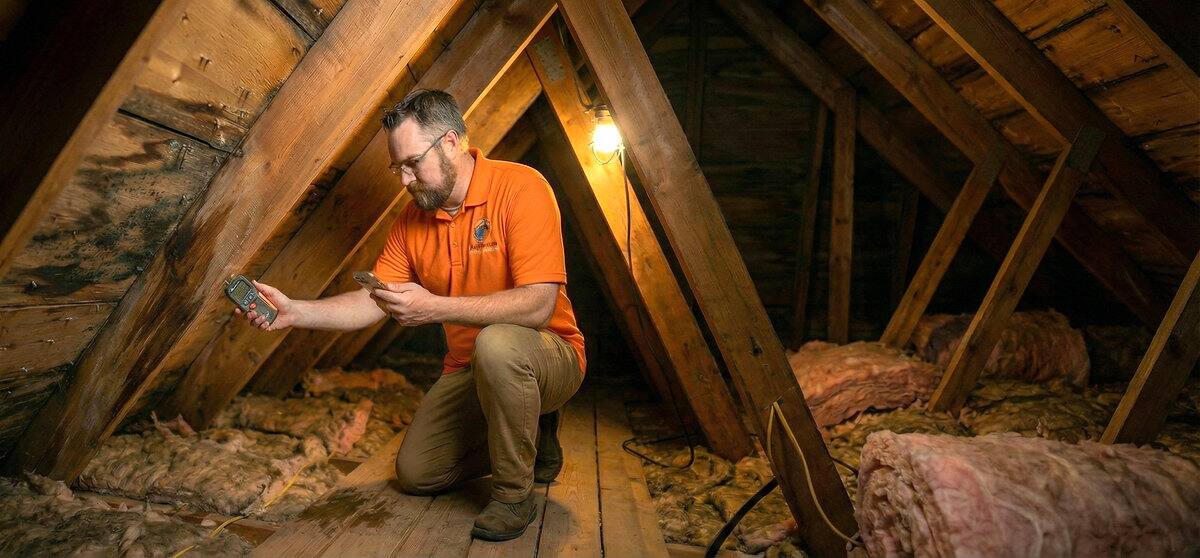
Attic moisture problems don’t start on the roof. They start with what’s happening inside your home. Here are the 10 conditions I check first.
Quick Answer
Most attic moisture problems in Southern NB are caused by indoor air leaking into the attic, not a failing roof. The three most common drivers are bathroom exhaust fans venting into the attic, unsealed ceiling penetrations, and blocked soffit vents. If I find more than a couple of these in the same attic, the conversation shifts from cosmetic staining to active remediation.
Why This Matters
I have inspected thousands of attics across Saint John, Hampton, Rothesay, Quispamsis, and Sussex over my 10+ years in home inspection. In that time, I have seen attic moisture problems evolve from a minor issue to a structural and health threat when left unaddressed.
Most homeowners do not look up there. When they do, they often cannot distinguish between a minor cosmetic stain and the early signs of a serious ventilation failure. This guide walks you through exactly what I am looking for and what each condition means for your home.
The difference between a $100 fix and a $10,000 remediation often comes down to knowing what to look for in the attic before the problem gets worse.
This guide walks through the 10 conditions I check first in every attic across Southern New Brunswick, what each one means, and what it typically costs to fix.
Attic moisture problems start quietly. A small air leak here, weak ventilation there, warm humid air finding its way into cold spaces. The result is condensation, staining, and mould like growth on roof framing and sheathing, often developing for months or years before anyone notices.
After thousands of attic inspections across Southern NB, these are the 10 conditions that most reliably predict moisture problems. If I find more than a couple of these in the same attic, the conversation with the buyer usually shifts from “what’s that stain?” to “here’s what’s actually driving it.”
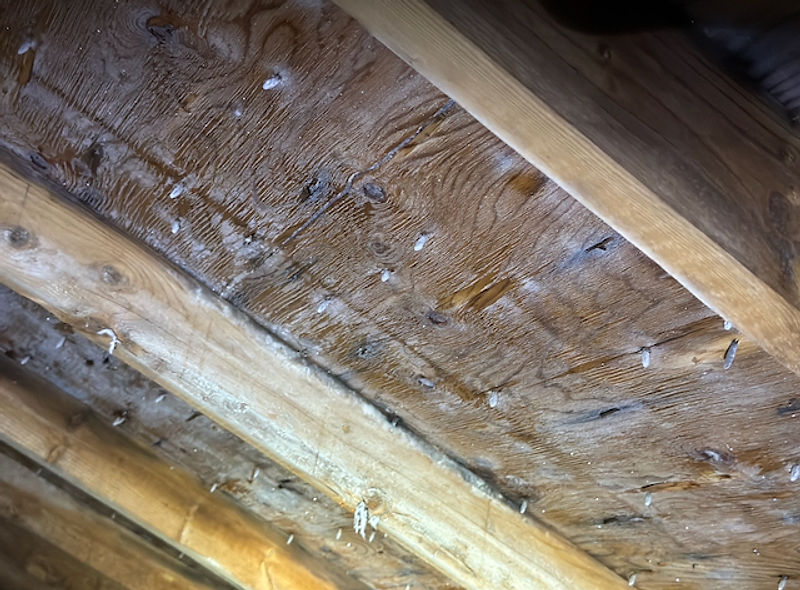
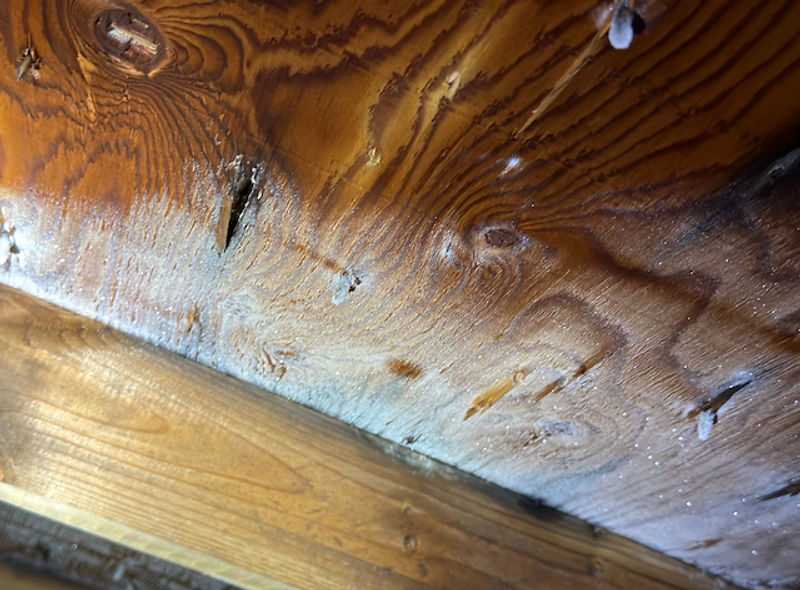
One Roof, Two Views: What Attic Condensation Looks Like from Outside and In
1. Bathroom Fan Duct Terminated in the Attic
This is the single most common cause of attic moisture problems I see. The flexible duct from the bathroom exhaust fan ends somewhere above the insulation, sometimes near the eaves, sometimes just hanging in the open attic space, dumping warm, humid air directly into a cold environment.
The result is predictable: condensation forms on the cold roof sheathing and framing, and over time you get staining and mould like growth concentrated around the discharge point. It’s an easy fix, but one that gets missed for years because most homeowners never look up there.
Typical cost: Proper exterior duct routing runs $200 to $500 per fan (DIY) or $400 to $800 professionally installed.
Next step: Route bathroom exhaust to the exterior using a proper wall or roof cap termination.
2. Disconnected, Crushed, or Leaking Exhaust Ducts
Even when the duct is routed toward the exterior, it does not always make it there in one piece. I regularly find ducts that have separated at joints, been crushed by someone stepping on them, or are sagging badly enough to hold water in the low points. Sharp bends, loose tape, and unsupported runs are all common, especially in older homes where someone has been in and out of the attic over the years.
Restricted or leaking ducts reduce airflow and deposit moisture both in the attic and inside the duct itself. A duct that sags and holds water becomes a condensation source on its own, dripping moisture onto the insulation below during temperature swings.
Typical cost: Duct repair and replacement runs $150 to $400 per duct.
Next step: Restore proper connections, support, and slope. Replace flexible duct with rigid or semi rigid where possible. Insulate ducts running through cold zones.
3. Frost or Condensation on Nails or Roof Sheathing
This is the one that tells me immediately what is happening. During cold weather inspections, I see frost forming on the tips of roofing nails that poke through the sheathing, or water droplets on the underside of the plywood or OSB. These are classic indicators that humid indoor air has found its way into the attic and condensed on cold surfaces.
On a mild day you might miss it entirely. On a cold January morning in Southern NB, the attic tells you everything. The nails act as thermal bridges, pulling cold from outside and condensing warm moisture from inside. Widespread nail frosting across the sheathing tells me the moisture source is systemic (air leakage, ventilation deficiency), not isolated to one spot.
Next step: Evaluate ventilation pathways and identify where air leakage is occurring.
4. Dark Staining on Roof Sheathing or Framing
Dark patches on the sheathing, rafters, or truss chords. Spotty growth patterns near the eaves, in valleys, or around penetrations. The tricky part is figuring out whether you are looking at condensation damage or a roof leak, because the staining can look the same from the attic side.
Condensation staining tends to be more widespread, especially near the eaves where cold air meets warm. Roof leak staining tends to concentrate around specific penetrations and flashing points. The distinction matters because it changes the repair plan entirely. A condensation problem requires ventilation and air sealing work. A roof leak requires flashing and roofing repair. Treating the wrong one wastes money and leaves the real problem active.
Next step: Determine the source, condensation vs. roof leakage, before planning any remediation.
5. Blocked Soffit Vents at the Eaves
Soffit vents are the intake side of your attic’s ventilation system. Fresh air enters at the soffits, rises along the underside of the sheathing, and exits at the ridge or roof vents. When insulation is packed tightly into the eaves with no baffles in place, that intake gets choked off. The attic cannot ventilate as intended, and moisture retention goes up.
I see this in a lot of homes where insulation has been blown in over the years without anyone installing proper baffles to maintain the air channel. The insulation blocks the soffit openings, and the attic goes from a ventilated space to a partially sealed one. It also increases ice dam risk in winter, because heat that should be venting out stays trapped against the sheathing.
Typical cost: Baffle installation runs $2 to $5 per rafter bay (materials) or $500 to $1,500 professionally installed for a full attic.
Next step: Install or restore baffles (chutes) at each rafter bay to maintain a clear air path from soffit to attic.
6. Inadequate Insulation Coverage and Voids
Thin, uneven insulation. Exposed drywall or ceiling areas. Insulation disturbed or displaced at the eaves by wind washing. All of these increase heat loss from the conditioned space below, warming attic surfaces that should stay cold. When you combine heat loss with air leakage, condensation potential goes up significantly.
I use thermal imaging to map exactly where the gaps are. It is often eye opening for buyers to see how much heat is escaping through areas that look perfectly fine from the living space below. Rim joists, top plates, and recessed light fixtures are among the most common thermal bridging points I identify during attic inspections across Southern NB. The good news is that NB Power’s SaveEnergyNB programs offer rebates and funding for many insulation and air sealing upgrades, making these corrections more affordable than most buyers expect.
Typical cost: Insulation top up to current code levels runs $2,000 to $5,000. Full attic air sealing and insulation runs $5,000 to $10,000+.
Next step: Evaluate insulation depth and coverage. Top up to current code levels and address any voids or displaced areas.
7. Unsealed Attic Hatch or Pull Down Stairs
This is one of the biggest and most overlooked air leakage points in any home. The attic hatch, or pull down folding stairs, sits right in the ceiling between your heated living space and the cold attic. If there is no weatherstripping, no latch pulling it tight, and no insulation on the cover, it is essentially an open hole pumping warm, moist air straight into the attic every hour of every day.
I see this in almost every home I inspect. It is a cheap and easy fix that makes a measurable difference. Natural Resources Canada identifies attic air leakage as one of the largest sources of heat loss in Canadian homes, and the attic hatch is often the single biggest gap. A weatherstripped, insulated attic hatch costs under $100 in materials and takes less than an hour to install. For pull down stairs, an insulated tent box is the standard solution. These are some of the highest return improvements a homeowner can make for attic moisture prevention.
Typical cost: Weatherstripping and insulated cover runs under $100 in materials. Insulated tent box for pull down stairs runs $150 to $300.
Next step: Add weatherstripping, a latching mechanism, and an insulated cover. For pull down stairs, consider an insulated tent box.
8. Unsealed Ceiling Penetrations
Open gaps around bathroom fan housings, plumbing vents, electrical wiring, pot lights, top plates. Any break in the ceiling plane is a potential air leakage pathway. Even small gaps can move a surprising amount of warm, moist air into the attic under stack effect pressure.
Typical cost: Air sealing ceiling penetrations runs $200 to $600 (professional air sealing package).
Next step: Seal all ceiling penetrations with appropriate materials (fire rated caulk, foam, or gaskets depending on location).
9. Plumbing Stacks, Chimneys, and Roof Penetrations
Stains or dampness around vent pipes, chimneys, skylights, or valley areas. Rusted fasteners, wet insulation, or localised discolouration. These signs can indicate roof leaks, and roof leaks can look very similar to condensation staining from the attic side.
The key difference is location. Roof leaks tend to concentrate around specific penetrations where flashing has failed or sealant has deteriorated. If staining is isolated to one spot and you can trace it to a penetration point, it is more likely a flashing issue than a ventilation problem. Chimney flashings and plumbing vent boots are the two most common failure points I see on roofs across Southern NB.
Typical cost: Flashing repair runs $200 to $500 per penetration. Vent boot replacement runs $100 to $300.
Next step: Evaluate flashings and seals at all roof penetrations. Repair or replace as needed.
10. Vermiculite or Other Suspect Insulation
That granular, pebble like insulation, often grey brown, that sits in the attics of many older NB homes. As I have written about in my guide to the 10 most common findings in older homes, not all vermiculite contains asbestos, but a significant percentage was contaminated at the source.
Until it is tested, it should be treated as suspect and left undisturbed.
From a moisture perspective, the real issue is access. When I cannot safely enter or move through an attic because of suspect insulation, conditions underneath it, air leaks, staining, ducting problems, go unreported. It is a blind spot that can hide exactly the kind of moisture issues this entire checklist is about. That limitation is documented in the report, but it means the buyer is making a decision with incomplete information about the attic space.
Health Canada recommends that homeowners not disturb vermiculite insulation until it has been professionally tested. If testing confirms asbestos content, professional abatement is required before any attic work can proceed.
Typical cost: Vermiculite testing runs $300 to $500. Professional removal if asbestos confirmed runs $5,000 to $15,000+.
Next step: Have the material tested. If it contains asbestos, professional abatement is required before any attic work can proceed.
What It All Costs: Summary
- Bathroom fan duct routing to exterior: $200 to $800
- Exhaust duct repair or replacement: $150 to $400
- Ventilation assessment and correction: $500 to $2,000
- Sheathing cleaning (surface mould): $1,500 to $4,000
- Baffle installation (full attic): $500 to $1,500
- Insulation top up to code: $2,000 to $5,000
- Attic hatch sealing and insulation: under $100 to $300
- Ceiling penetration air sealing: $200 to $600
- Flashing and vent boot repair: $100 to $500
- Vermiculite testing and removal: $300 to $15,000+
- Full sheathing replacement (if structural damage): $8,000 to $15,000+
Most attic moisture problems can be resolved for under $2,000 if caught early. The most expensive repairs happen when condensation has gone undetected for years and the sheathing has deteriorated to the point of structural failure. That is why the inspection matters.
What This Checklist Does Not Cover
Lab confirmation of mould. A visual inspection identifies indicators, not species. Hidden conditions under deep insulation or finished ceilings. Exact ventilation sizing requirements, which vary by roof design and assembly. Indoor lifestyle moisture sources. High humidity from cooking, showers, and drying laundry may require separate humidity control strategies.
When to Bring In a Home Inspector
If you are buying, a thorough inspection that includes an attic evaluation with thermal imaging can identify moisture indicators early, before they become expensive repairs. If you are selling, resolving the big drivers (exhaust routing, air leakage, and ventilation pathways) before listing can prevent surprises during negotiations.
The New Brunswick building code sets minimum ventilation and insulation requirements for attic spaces, and meeting those minimums is the baseline for preventing condensation problems.
Most of the items on this list are fixable. Several of them cost under $200 in materials. The expensive part is not knowing they are there and letting the moisture accumulate for years until sheathing replacement or mould remediation becomes necessary.
If you already own the home and want a full picture of what is happening in the attic and every other system, a post closing inspection covers all of these conditions without the time pressure of a real estate transaction.
Frequently Asked Questions About New Brunswick Attics
How can I tell if attic staining is from condensation or a roof leak?
Condensation indicators tend to appear more widespread: nail frost, broad sheathing staining near the eaves. Roof leaks tend to cluster around penetrations, valleys, and flashing points. A visual check cannot always confirm the source, which is why identifying the pattern matters. The repair plan depends on getting this distinction right.
Should I run a dehumidifier to solve attic moisture?
A dehumidifier may reduce indoor humidity levels, but attic moisture problems usually need targeted corrections: exhaust routed to the exterior, ceiling air leaks sealed, and ventilation pathways restored. Treating the symptoms without fixing the source rarely solves the problem long term.
How much does attic mould remediation cost in Southern NB?
It depends on the extent of the damage. Surface cleaning of mould like growth on accessible sheathing can run $1,500 to $4,000. If sheathing replacement is required due to structural deterioration, costs can reach $8,000 to $15,000+. Prevention through proper ventilation and air sealing is significantly less expensive than remediation.
What time of year is best to check an attic for moisture issues?
Cold weather makes condensation indicators more visible: frost on nails, damp sheathing, active condensation. But staining patterns from past moisture events can be seen year round. A winter inspection tends to reveal more, but any time of year has value.
Is attic mould always a roof problem?
No. Many attic moisture issues are driven by indoor air leakage and poor exhaust routing rather than failed shingles. The roof may be fine. The problem is often what is happening below it: exhaust fans venting into the attic, unsealed ceiling penetrations, and blocked soffit vents.
Does adding insulation fix attic condensation?
Sometimes, but not by itself. If air leakage and exhaust issues remain, more insulation can still leave moisture pathways active. Insulation slows heat loss, but it does not stop air movement. You need both: air sealing first, then insulation.
The Bottom Line
Attic moisture problems don’t announce themselves. They build quietly until someone finally looks up. The earlier you look, the less it costs to fix.